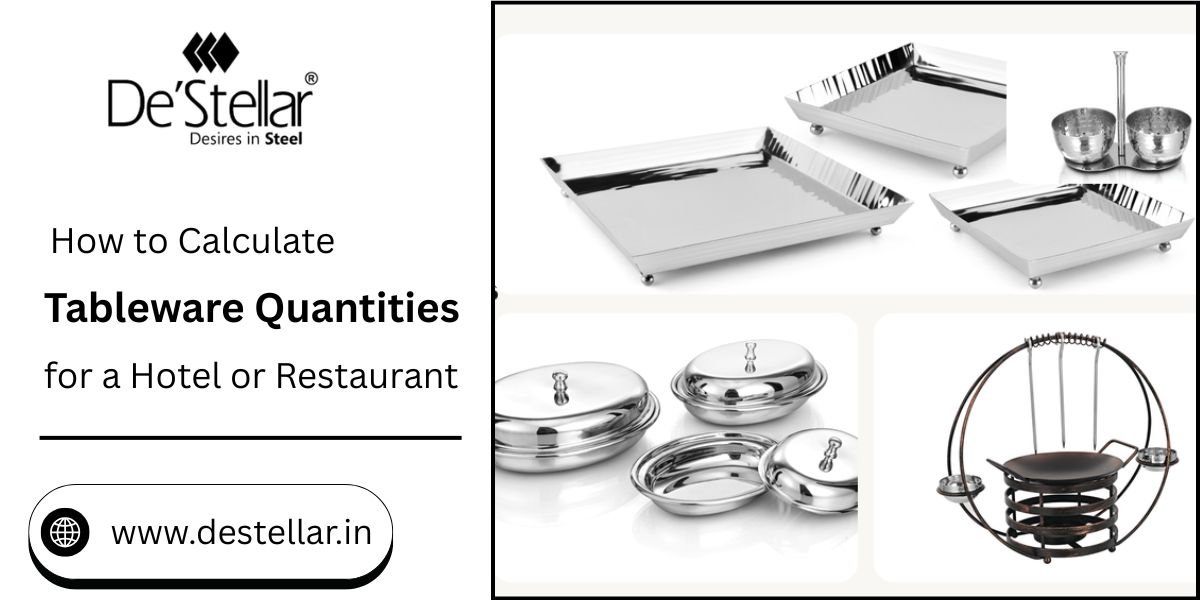
How to Calculate Tableware Quantities for a Hotel or Restaurant?
Running out of plates during dinner service can be costly. Reducing excess stock saves you money by avoiding overbuying and tying up cash. That said, it is harder to find the right number because every property type has different menus and seating. An effective counting methodology helps eliminate speculation and guesswork by keeping budgets and service levels consistent.
Hotel tableware quantity planning generally starts with a few simple inputs that any team can measure. Other factors include table availability, the time it takes to return dirty dishes to the kitchen, and expected peak hours. After you sort these, the rest is simple arithmetic with a sensible safety margin. When teams adopt this approach, they rarely run out of tableware during busy dinner services; this confidence helps managers avoid emergency buy-in.
Why Accurate Tableware Counts Protect Your Budget
The restaurant tableware requirements change frequently. However, most operations require sufficient pieces to keep service moving smoothly. A few items can cause delays and stress, while too many orders can tie up cash, cabinet space, and washing capacity.
Having all the figures in the right places can add a lot of perks, including:
- Seamless service during the rush or peak hours
- Less money tied up in stock
- Less urgent last-minute purchases or delays
- Ease of storage and complete kitchen organization
- Extremely predictable monthly purchase budgets
Precision counting also makes planning easier for new menus or seasonal events. Managers become extremely confident since every order relies on facts instead of assumptions.
A Practical Framework for Counting Tableware Needs
Several factors shape hotel tableware quantity planning, and each one changes how many pieces you should keep.
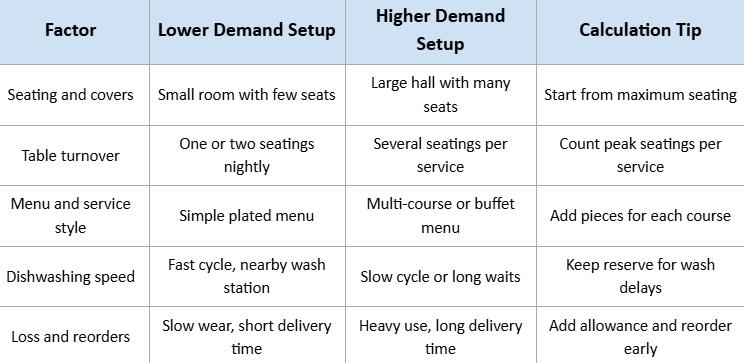
The table below gives a quick glimpse of how each factor impacts the overall quantity calculation:
Seating Capacity and Covers
Tableware quantity depends on seating capacity. Also count the maximum guests you would serve at one time. That figure determines how many place settings you should prepare.
Planning Steps to Take
- Total count of number of tables and seats
- Including private dining areas
- Note the seating outdoors or terrace places, if any
- Use maximum instead of average occupancy
Accurate seat counts give almost every purchase a clear starting point. Also plan tableware requirements when setting up a new restaurant by starting with the maximum number of seats.
Table Turnover and Peak Hours
Table turnover calculates how many times each seat is used in a single service. Busier restaurants with multiple seatings will need more clean pieces available, since plates will cycle back right after washing.
Planning Steps to Take
- Counting the number of seatings per service
- Identifying peak days and rush hours
- Allows for sudden walk-in rushes
- Align the stock to meet peak demand
Peak demand should drive almost every stock level, not quiet weekday averages. Tableware restaurants need for daily service should cover the busiest times without running short on supplies.
Menu and Service Style
Buffets, plated courses, and set menus all determine how many pieces of tableware a guest will use. Effective banquet tableware quantity planning should cover almost every course for the complete guest list.
Planning Steps to Take
- Enlist every piece that gets used per course
- Count almost every course differently
- Ensure you include side plates and bowls
- Allow additional pieces to share
A tableware thought list can make bulk orders easier to calculate. Also, dining supplies for high-volume hospitality service prevent budget overruns once you clearly define every-course needs.
Dishwashing Speed and Reserves
Clean dishes should return to the service bay almost immediately to prevent service delays. Delays in dishwashing, longer breaks between service cycles, or limited staff can increase demand for reserve stock.
Planning Steps to Take
- Always calculate the entire dishwashing time
- Keep track of the waiting times
- Hold a reserve stock to prevent service delays
- Plan for additional stock for specific events or occasions
Always keep stock reserved. It’s your preventive approach when washing delays service. Almost every handcrafted table essential should have spare clean pieces to cover a complete service delay.
Loss Allowance and Reordering
Over time, tableware can break, go missing, bend, and get damaged. So, add a loss allowance to all calculations. Bulk tableware orders for hotels are time-consuming to place and ship. It’s a good idea to reorder early here.
Planning Steps to Take
- Determine the loss allowance
- Monitor broken items monthly or weekly
- Buy and pay immediately when in stock
- Verify lead times from suppliers earlier
Update reviews to keep the allowance realistic as guest habits change. For hotel tableware, maintain normal ordering while respecting demand and needs.
Set the Table for Lasting Success
Nearly every restaurant with a fancy name has to honor its guests’ promise every day. They will always have what they need, when they need it. With careful planning, you can ensure that without wasting time or adding stress. When plans are changing, a planning team should remain cool, calm, and collected.
At De’ Stellar, we help each hospitality buyer turn quantity planning into an order list. Plates, bowls, barware and buffetware are all available in a stainless steel range. With our help, you can meet all your service needs. Quantities are flexible too. In-house production lets us supply bulk tableware orders for hotels, ensuring consistent quality regardless of quantity.
Contact us today with your expected guest count and service needs. With our consultation, we can help you plan your order accurately!
Frequently Asked Questions
Is stainless steel good for busy hotels?
Yes, stainless steel simplifies hotel tableware quantity planning because it resists chipping and breakage. You need fewer replacements than with fragile materials such as ceramic.
Should I buy everything at once?
Starting with core pieces and adding specialty items later can protect cash flow. Buy full matching sets together, though, so finishes and sizes stay consistent.
How should I store spare tableware?
Keep spare pieces in dry, labeled shelving close to the service area. Stack matching items and rotate stock so you use older pieces first.
How many serving bowls does a buffet need?
Plan one serving bowl for each dish, plus one spare so refills never stop service. Add more if the same dish appears at multiple stations.
Can one set cover restaurant and banquet use?
Yes, if the pieces stack well and suit both service styles. Banquet tableware quantity planning should keep separate reserves so daily service never runs short.