
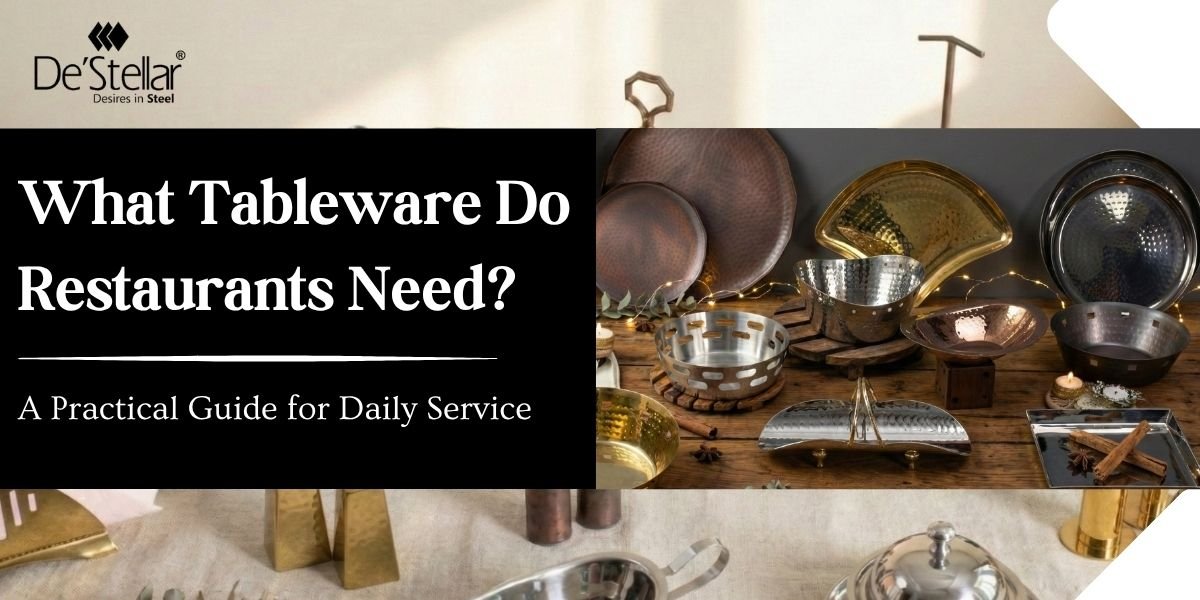
Restaurants need tableware that matches their menu, service style, customer volume, and daily operating needs. The basic setup usually includes dinner plates, side plates, bowls, serving pieces, and beverage service items. The right quantity depends on seating capacity, table turnover, cleaning time, and peak demand. Choosing practical, durable products also helps restaurants maintain consistent service without carrying unnecessary inventory.
A restaurant does not need every type of tableware available in the market. The right selection starts with the food being served and how customers are served.
For most restaurants, the core collection includes plates, bowls, serving ware, and beverage service products. Additional pieces can be added when the menu or dining format requires them.
Before ordering, consider:
Answering these questions makes it easier to build a practical purchasing list.
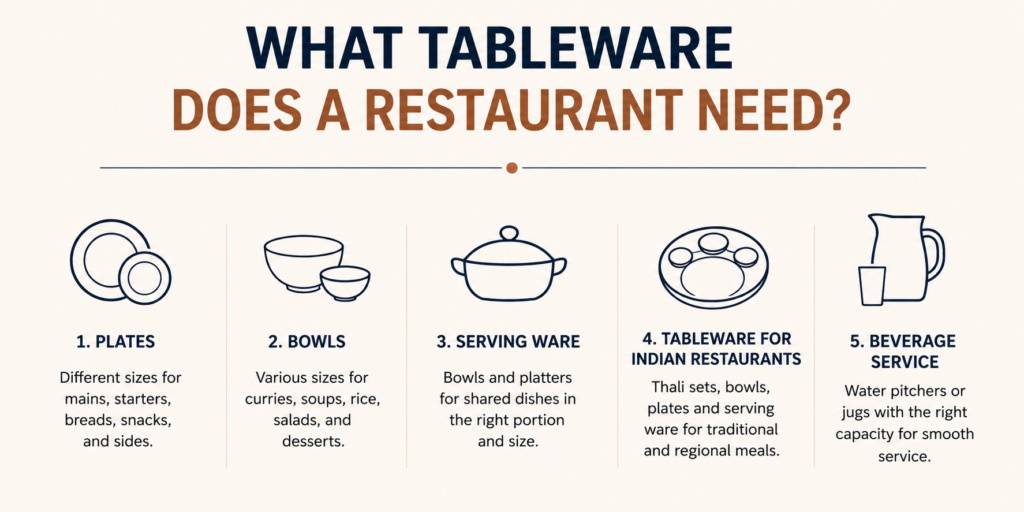
Plates are among the most frequently used pieces in a restaurant. Most businesses need more than one plate size because different dishes require different serving areas.
A typical restaurant may use a larger plate for main meals and a smaller plate for starters, breads, snacks, or side dishes.
The best sizes depend on the menu. For example, a restaurant serving large rice-based meals may need a different plate format from one focused on smaller plated dishes.
When purchasing in bulk, consistency is also important. Keeping commonly used plates in coordinated sizes and finishes can create a more organized table setting.
Bowls are useful across many restaurant menus. Curries, soups, dal, rice, salads, desserts, and smaller portions may all require different bowl sizes.
Instead of buying the same quantity of every bowl, look at your menu and identify which products will be used most often.
For example, a restaurant serving several curry dishes every day may require a larger working quantity of portion bowls. A specialty dessert bowl used for only one menu item may require a smaller quantity.
This approach helps restaurants use their purchasing budget more effectively.
Restaurants that serve food for sharing need suitable serving pieces in addition to individual tableware.
Serving bowls work well for shared curries, vegetables, rice, salads, and other dishes. Platters can be useful for starters, breads, snacks, grilled foods, and items intended for presentation.
The size should match both the portion and the number of guests. An oversized piece can take up unnecessary table space, while a small one may not provide enough capacity.
For businesses that need different serving options, commercial serving ware can be selected according to the menu and style of service.
Indian restaurants can have more varied tableware requirements because meals may include several dishes served together.
Depending on the menu, restaurants may use thali sets, smaller bowls, full plates, serving bowls, and other pieces for traditional or regional meals.
A restaurant offering both individual dishes and complete meals may need a combination of standard dinnerware and thali-style service.
The key is to select products according to the actual menu instead of purchasing a large variety that may not be used regularly.
Water and beverage service should also be considered when planning a restaurant table setting.
Water pitchers or jugs should be practical to carry and pour, while their capacity should suit the size of the table and expected customer use.
For restaurants serving many tables during busy periods, a suitable pitcher capacity can reduce unnecessary refilling and help staff maintain efficient service.
Stainless steel options can be considered where businesses want a durable material suited to regular commercial use. De’Stellar offers stainless steel water pitchers and related hospitality products for bulk requirements.
There is no single quantity that works for every restaurant.
A 100-seat restaurant, for example, does not necessarily need exactly 100 of every product. Some tableware will be in use, some will be going through the cleaning process, and additional pieces may be needed during busy periods.
A simple planning process is:
High-use products generally need more stock than specialty items.
Restaurants need products that can fit into their daily operating environment.
Before placing a bulk order, review:
For larger purchases, it is also useful to ask the supplier about specifications, lead times, packaging, and repeat-order availability.
Use this checklist before finalizing your purchase:
Key takeaway: The right restaurant tableware collection is not about buying the most products. It is about selecting the right products and quantities for your menu, service style, and daily customer volume.
A few purchasing mistakes can make a tableware order more expensive or difficult to manage.
Avoid buying large quantities of products that are rarely used. It is also better not to choose sizes without checking actual food portions and table space.
Restaurants should also avoid selecting products based only on price. Material, construction, dimensions, finish, supplier consistency, and future availability can affect the overall value of a commercial purchase.
For businesses ordering in bulk, it is useful to review the complete product specifications before confirming the order.
Restaurant tableware should be selected according to the way a business actually operates. Plates, bowls, serving ware, beverage products, and specialty pieces each have a practical role, so understanding the menu and service process should come before deciding quantities.
For restaurants, hotels, caterers, and other hospitality businesses, buying the right products in suitable quantities can make daily service easier and future replacement more manageable. Explore the commercial stainless steel tableware range or contact De’Stellar to discuss bulk hospitality requirements.
Most restaurants need dinner plates, side plates, bowls, serving pieces, and beverage service items. The exact selection depends on the menu and service format.
The required quantity depends on seating capacity, table turnover, service periods, cleaning time, and backup requirements. There is no universal number for every restaurant.
Restaurants commonly use bowls for curries, soups, rice, salads, desserts, and individual portions. Different capacities may be required for different dishes.
Some Indian restaurants use thalis, katoris, portion bowls, and other pieces for traditional meal service. Requirements depend on the menu and dining format.
Serving bowls and platters are common choices for shared dishes, starters, breads, salads, rice, and other menu items.