Stainless Steel Vs Copper Vs Brass Handi: Which Is Better for Your Kitchen?
Indian cooking mainly relies on the right type of pot being chosen. Biryani, dal, pulao, and curries will need steadier heat and a vessel that matches every dish type. A poor match can scorch rice or make cookware extremely hard to clean.
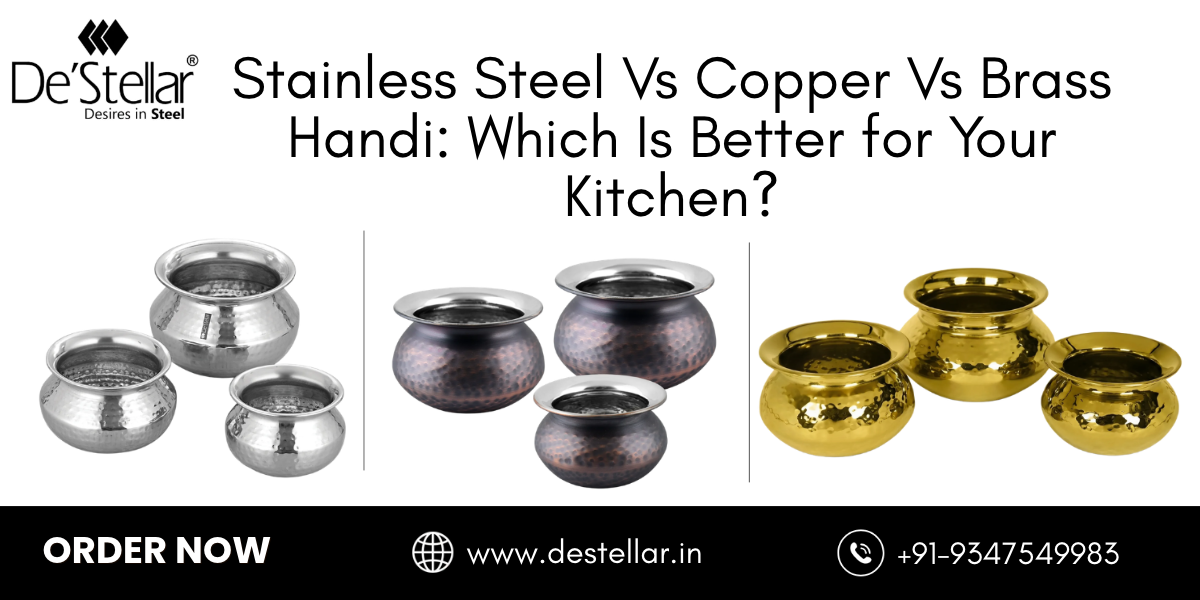
Materials such as stainless steel, copper, and brass are the three primary materials that handis come in. They differ in terms of durability, heat, looks, and maintenance. The right choice depends on how you cook, and a stainless steel handi is often the easiest to choose for your kitchen.
Three Handi Materials in Indian Kitchens
Each metal has its own design, so the basics come first before you compare.
Overview of Stainless Steel Handi
Stainless steel is a material that is resistant to corrosion and is commonly found across Indian kitchens. Also, it’s the sturdiest, most practical and easiest-to-clean choice.
Handis come in different sizes, finishes, and designs, from smaller family pots to larger commercial biriyani handis for busier hotel and catering kitchens.
Overview of Copper Handi
Copper is the most traditional Indian cookware metal with a reddish appearance. It also conducts heat well, so food can heat evenly.
Copper cookware will need a well-suited food-contact lining, as acidic dishes can react with bare copper. Most cooks can keep a stainless steel handi for every Indian dish.
Overview of Brass Handi
Brass is a typical alloy made primarily from zinc and copper. It comes in a golden color and has a long history of use in Indian homes, which gives it a traditional appeal.
Also check the material composition and lining before you start cooking in brass. This will apply to almost every size, including larger commercial biryani handis.
How Each Material Differs in Daily Use
Factors including heat response, maintenance, and food safety can differentiate between all the metals, and a stainless steel handi will create a useful baseline for all.
Heat Distribution and Performance
Copper is a good heat conductor that distributes evenly, and brass is typically slower. Stainless steel is also slower, though a thicker base spreads the heat evenly throughout. Even heat matters most in a commercial biriyani handi where bottom rice might scorch.
Main factors to look for:
- Copper heats faster and evenly
- Brass heats slowly
- Steel will need a thicker base
- Even heat can protect the bottom layers
Choose the material based on the dish and batch size. The same consideration applies when choosing tableware for different food service operations, where each kitchen differs.
Durability, Upkeep, and Safety
Stainless steel is a material that’s resistant to rust, stains, and dents and can be cleaned with dishwashing soap and water. Copper and brass can tarnish gradually, so they need regular polishing and lining checks.
Main factors to look for:
- Steel is resistant to dust and rust
- Copper often tarnishes without polishing
- Brass requires regular polishing
- Linings start wearing out and need proper checks
Regular maintenance is important in kitchens that cook almost every day. The same is true when choosing stainless steel tableware for 5-star hotels and other luxury or premium settings.
Appearance and Everyday Suitability
Both copper and brass can add a warm, traditional appearance that suits both display and serving. Stainless steel offers a cleaner, modern shine that suits regular cooking, quick service, and heavy use.
Main factors to look for:
- Copper adds a warm reddish glow
- Brass gives a golden traditional look
- Steel can maintain its shine
- Easy care that’s suited for regular cleaning
Choose the look for your table, and that’s easy for the stove. Most busy kitchens can find the proper balance between both.
Conclusion
The best type of handi mainly relies on your cooking requirements, maintenance routine, and food-contact suitability. Copper and brass are ideal for careful cooking. At De’Stellar, we manufacture stainless steel handis for better convenience and classic kitchen use. Contact us today to discuss your requirements in detail!
Frequently Asked Questions
How Do I Choose a Handi Size for Biryani?
Choose a size where rice can fill almost half to two-thirds of the pot, not more. This will leave sufficient room for steam, stirring, or even cooking.
Can Stainless Steel Cookware Work on Induction?
It’s possible only if the base of the cookware is magnetic, as hobs need magnetic metal. Also check the product details or hold a magnet to the base to test it.
How Should I Clean a Handi After Cooking Biryani?
Soak it in warm water to loosen stuck rice, then wash it with mild soap. Dry it completely with a soft cloth to prevent any water marks.
How Long Does Handi Cookware Last?
Regular cleaning and careful use will make quality cookware last for several years. Lifespan typically relies on the thickness of the wall, regular use and how properly it’s maintained.