
Opt for dining supplies that maintain the pace of service without sacrificing quality or appearance.
Hotels, restaurants, banquet halls, and catering services serve significant numbers of customers on a daily basis. In such environments, tiny supply issues can quickly impact culinary operations and guest service. Good hospitality procurement planning helps businesses to pick products that can stand up to several uses, frequent cleaning, and hectic periods of service.
The proper supplies must match the menu, service style, storage space, and expected volume of guests. But purchasing things based on look or price alone might lead to issues later. A better way is to first understand how each item will be used.
The first thing is to know how many customers the business caters to during normal days and during busy occasions.
One hotel could provide breakfast, lunch, and supper for different people. A banquet facility may accommodate hundreds of visitors at a time. Also, catering businesses could move supplies from one site to another.
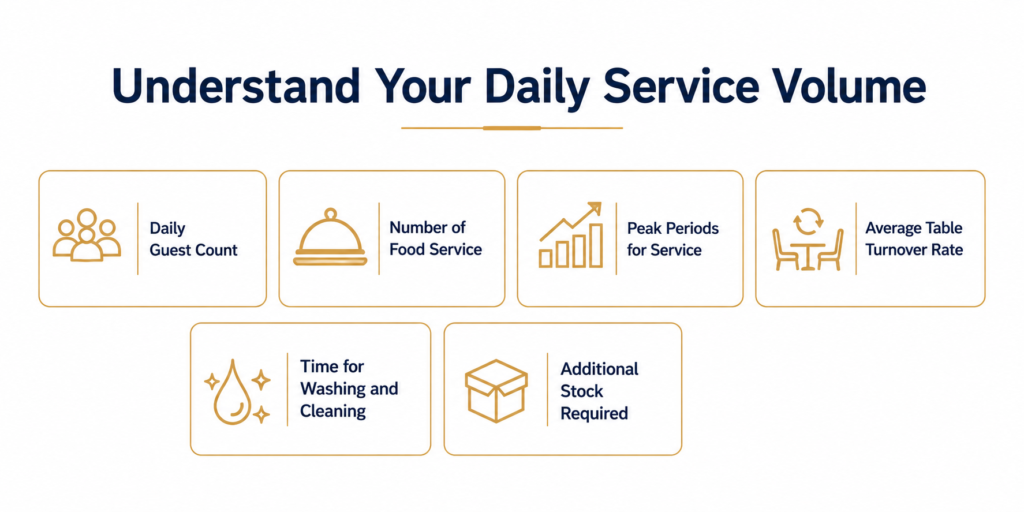
Make a basic estimate of:
This information is a realistic starting point for buying quantity.
The materials directly affect the life and maintenance of the product. In busy hospitality facilities, stainless steel is a material of choice for plates, bowls, serving pieces, trays, and buffet goods. If properly maintained, it provides good strength and resists corrosion and everyday wear.
Glass, ceramics, and other materials might be suitable for some purposes too. But their appropriateness relies on the frequency of handling and washing of items. The aim is to choose materials that are consistent with real circumstances of use.
Beautiful things may make the presentation of meals better. But they should also be realistic for personnel to work with. Think about if the plates are easy to stack or the serving pieces are easy to hold. Are things easy to transport from the kitchen to the dining area?
For example, a hotel with a big restaurant, room service, banquets, and buffets may need multiple product sizes. One style of product may not perform as effectively in all areas.
Many used materials are washed multiple times during the day. Complex items might be harder to clean and put more of a burden on workers. Use smooth surfaces and functional forms as much as feasible. Products must also be easily inspected after washing.
Storage is important, too. Safe stacking of items reduces scratches, damage, and unwanted handling.
One error that’s often made is to order the precise amount of things needed to fit the number of seats. Some items will be in the kitchen, washed, stored, or utilized at a different service station. A little buffer stock helps prevent stock-outs during peak periods.
When buying commercial dining supplies, think about additional amounts for busy seasons, special events, breakage, and future visitor growth. The exact amount depends on the business, but if you plan for operational gaps, you won’t be making emergency purchases.
The product selection should be driven by a menu. A restaurant selling Indian cuisine could need thalis, katoris, bowls, and big serving dishes. A continental restaurant may have plates and serving pieces of varied sizes.
Hotels providing buffet service need chafing dishes, serving spoons, trays, bowls, and display pieces. So the first step in buying should be the menu, not a generic product list. Think about storage and kitchen space.
Before ordering, measure shelves, cabinets, racks, and service spaces. Choose things that can be stacked or stored efficiently. This is particularly crucial for high-volume dining when big volumes need to be kept available during busy service.
Good storage layout also helps personnel discover supplies quickly and eliminates unnecessary movement in busy kitchens.
A supplier has to be more than a product catalog. Ask about the specs of the material, size of the product, finishes, bulk quantities, delivery dates, availability of replacement, and customization.
An excellent supplier will also be able to guide a firm in choosing items to meet the service needs rather than merely proposing the most expensive product. This makes hospitality procurement more tangible and allows firms to monitor their purchasing budget.
The lowest price doesn’t necessarily mean the best value. Some products wear out and may require regular replacement. Higher quality supplies may cost more initially but may last longer.
Compare durability, maintenance, product availability, and planned use before making a final selection. Also verify whether the supplier can deliver equivalent items later on for growing firms.
Choosing dining supplies for big hospitality companies takes considerable preparation. Businesses should consider visitor traffic, menu needs, materials, durability, storage, maintenance, and potential development before ordering.
De’Stellar provides stainless steel dinnerware and hospitality goods for the hotel, restaurant, catering, and other commercial food service industries. Its portfolio comprises tableware, serving goods, buffetware, barware, thalis, platters, and bowls, which may be finished in mirror, matte, hand-hammered, and PVD choices.
We can assist you in picking the right dining supplies depending on your service volume, product demands, and finishes you may desire. Get in touch with us immediately and we will discuss your requirements and go over our range.
Look at visitor numbers, menu requirements, quality of materials, durability, cleanliness, storage, amount, and supplier support.
Typical requirements include tableware, flatware, serving pieces, trays, glasses, buffet ware, and food display goods.
Buy the right amounts, select durable goods, preserve goods, and deal with vendors that offer reliable replacement choices.