Built for daily use, tested under pressure
Running a commercial kitchen is not an easy gig. Every utensil and serving ware gets under heavy use every day. Bowls stack, plates fall, as well as trays move quickly. So, it’s not solely about serveware aesthetics when you pick them; it also matters how long they last.
A plethora of buyers generally compare materials. But they often forgot to see how each one works over time. For example, the argument around stainless steel vs copper serveware restaurant choices is not only about style but also about how long it will last and how often it will be used.
In addition, five materials are most common in Indian HoReCa spaces: stainless steel, copper, melamine, porcelain, as well as ceramic. It is imperative to note that each one has its own pros and cons, and not all of them are suited to every situation. Here, we will compare each option so that you can pick the best option.
In a busy commercial kitchen, durability is the most important thing. Right? Serveware needs to be able to handle drops, stacking, washing, and heat.
People know that stainless steel is strong. It doesn’t break easily. Also, it is superior to other materials in not getting dents and scratches. It preserves its shape even after years of use. That’s why a lot of restaurants use it.
Copper looks expensive. But it is not as hard as steel. If you don’t take care of it, it can get dents easily. It lasts a long time if you take care of it, although it needs more attention in hectic settings.
Melamine is light and pretty sturdy. It can handle drops effectively. But unfortunately, it does get scratched over time and eventually loses its finish.
Porcelain is good to look at, but fragile. If you drop it, it could chip or crack. Also, using its serveware over and over increases the chances of breakage.
Ceramic is a little heavier than porcelain. It can break in case you put too much pressure on it. Although ceramic looks nice, it cannot bear rough use.
The National Sanitation Foundation (NSF) says that smooth, long-lasting surfaces that come into contact with food are less likely to get dirty. The reason is that they are easy to clean. This shows how hygiene is linked to the durability and texture of the material.
Food service needs to be very hygienic. Materials need to be able to fight bacteria and be easy to clean.
Stainless steel does not have any holes in it. Therefore, it doesn’t soak up food or drink. Also, it’s easy to clean and works well in dishwashers. This makes it one of the safest choices.
Copper naturally kills germs. But it needs to be lined properly to keep food safe. It also takes more work to clean in comparison to steel.
Melamine is easy to clean. But deep scratches can trap bits of food. This can impact hygiene over time.
The surface of porcelain is smooth. If it isn’t chipped, it cleans well. But once chipped, bacteria can get into the cracks.
Compared to porcelain, ceramic is a little bit permeable. Cracks in glazed porcelain can make it tougher to clean, but it is safer.
A lot of buyers merely care about the price. But the long-term expense is more important.
The initial expense is not too high. But it lasts for years. So, the cost of replacement remains pretty low. This makes it a good choice for the long term.
Copper is costly and at the same time demands precise care. It lasts a long time, but repairs and care efforts increase the overall cost.
The initial cost of Melamine is low. But it does scrape and fade. So, it needs to be replaced more often.
Porcelain is an affordable material. But breaking makes it need to replace serveware made of it more often.
Ceramic doesn’t cost much. But it is prone to cracks and chips that will eventually cost more in the long run.
This is when comparisons like stainless steel vs. melamine become really vital. Steel may cost more at first, but melamine may cost more in the long run since it needs to be replaced too soon.
Presentation is important, especially in dining areas.
Copper is unique. It looks a bit classic and luxurious. It works nicely for themed or high-end meals.
When it’s about a clean and modern look, stainless steel stands out. It works in both informal as well as business settings.
Melamine comes in a lot of different styles. But it typically looks less premium. It might not be good for fine dining.
Porcelain works really well when it’s about fine dining. It looks classy and tidy. But its fragility is a problem.
Ceramic has a hand-made look. It looks good in both casual and artistic settings. But it might not suit unified presentation needs.
So, the answer to the question, which is better – stainless steel or melamine, depends on use. Steel is great for long-term use as well as durability, whereas melamine is a better option for low buffet and design variety.
Different kitchens need different kinds of materials.
Buffets need serveware that is robust and lasts a long time. Stainless steel is the best. It can be used a lot and washed a plethora of times.
Fine dining is all about how the food looks. Porcelain and copper are good choices here. But you have to be careful with them.
Casual setups need to be balanced. Steel and ceramic are good options. They look good and last a long time.
Catering needs items that are light and robust. Stainless steel and melamine are good together.
When it’s about premium service, buyers again compare stainless steel vs copper serveware for a restaurant. The right pick depends on how much handling the item requires.
There is a place for every substance. But not all materials can handle commercial pressure the same way. Stainless steel is known for being long-lasting, easy to clean, and valuable over time. Copper looks nice, but it needs to be taken care of. Melamine is cheap, but it doesn’t last as long. Ceramic and porcelain appear nice, but they break easily.
So, the best option relies on your specific setup. But if you want something that will last, stainless steel is usually the best choice.
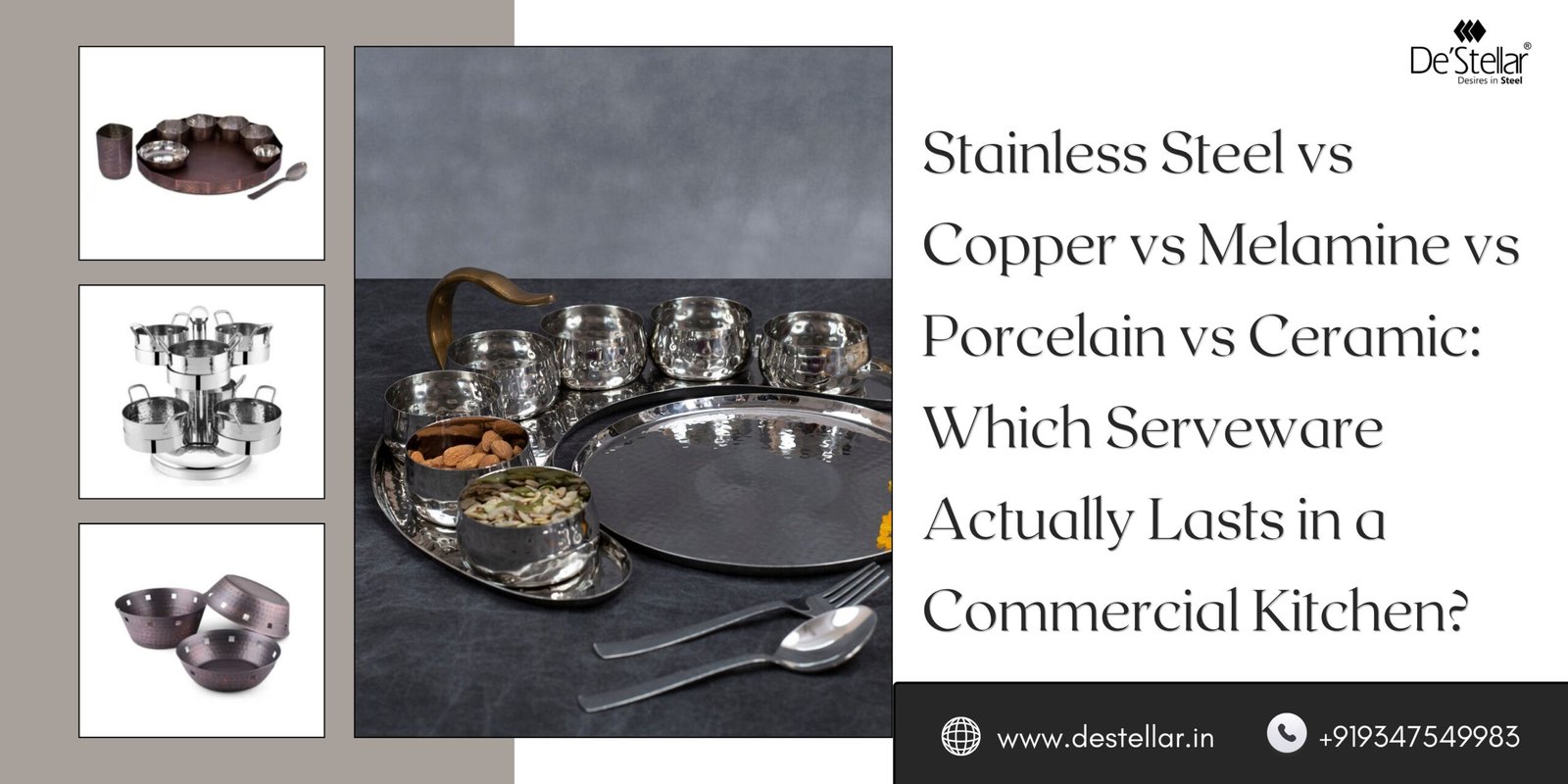
We combine the beauty of copper with the strength of steel at De’Stellar. The Copper PVD line gives you the beauty of copper and the strength of stainless steel. It is developed for modern kitchens that want things to look good and last a long time.
We assist you in picking out serveware that is as useful as your kitchen. Check out our selection today and feel good about improving your service.